
What a tipping point actually looks like
By Alex Tower Ewers, Director of Communications, ScreenSense

There is something a little bit different about the current 6th grade cohort at one of our local middle schools in Marin County in Northern California. Middle school staff report a palpable cultural and behavioral shift. We’ve heard “they seem more innocent and playful. They are more engaged. We have far less behavioral issues with them than we have had with 6th graders in the last few years”. Even the 7th and 8th grade students have noticed. They have commented, “The 6th graders are playing and talking with each other during recess!” - said partially with a tone of annoyance and a bit of envy at the same time.
What changed? We think we know.
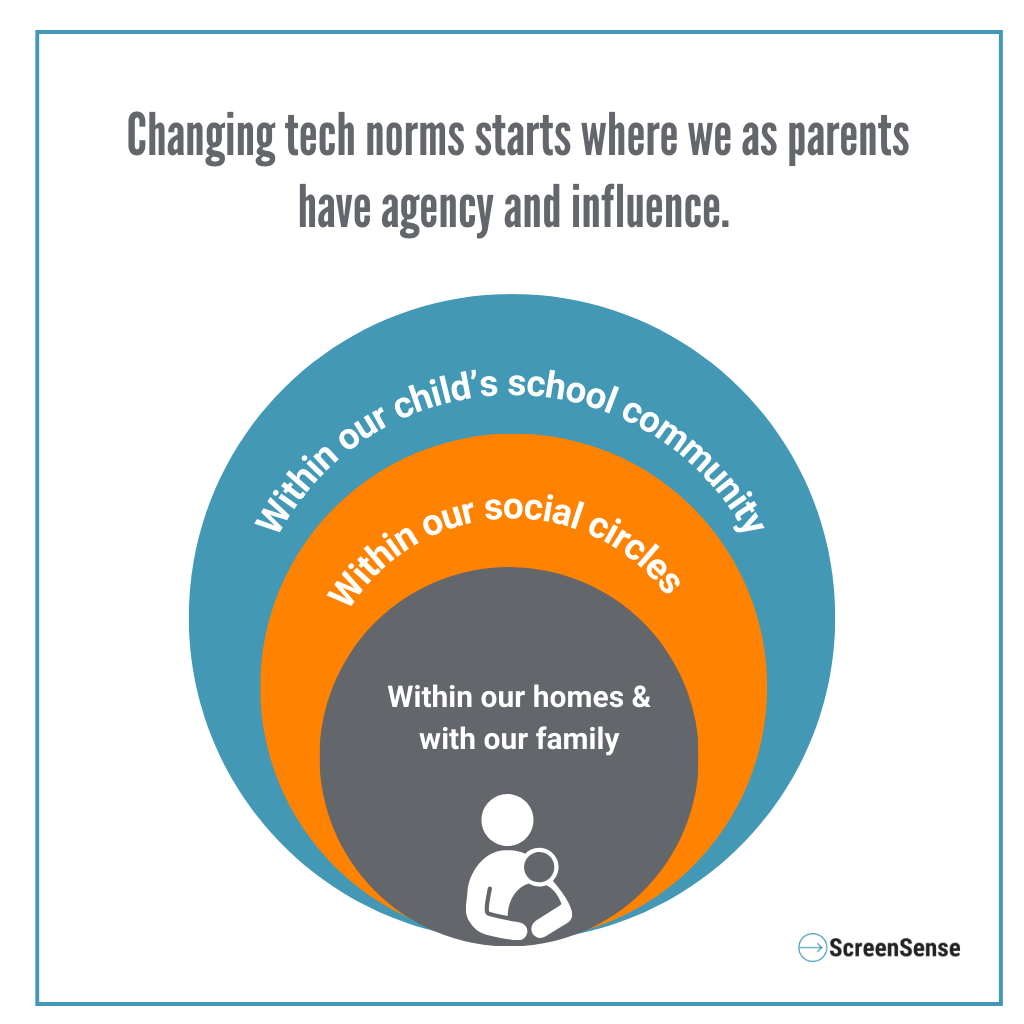
Around this time last year in Spring 2025, one mom of a 5th grader was already thinking about 5th grade graduation. She did not want to give her daughter a phone for 5th grade graduation - which has become a culturally normalized time to give a child their first smartphone. (This is a youth tech norm that we at ScreenSense are feverishly trying to change.) She’d read Jonathan Haidt’s Anxious Generation and knew it would be easier for her and her daughter if other parents also didn’t give a phone. She had signed on with us to be a Kids IRL School Ambassador at her daughter’s elementary school and knew she had a collective action tool created for the needs of our specific community: The Kids IRL Phone Pact. Her plan was to get as many parents across the 5 elementary schools in her district to sign the pact and delay giving a smartphone at the end of 5th grade. She started with clusters of parents at her daughter's school. Each cluster helped to create the next. With the help of Kids IRL ambassadors at the other 4 feeder elementary schools, these dedicated parents got 36% of all parents with a child in 5th grade to join the pact - surpassing the 25% tipping point needed to make social change. It didn’t mean that every parent of a 5th grader joined the pact to delay phones, but enough did - which changed the social necessity to have one.
As part of our local county-based Kids IRL initiative, we polled students at the end of 2025 to see smartphone rates in the middle school. We learned that less than 25% of current 6th graders at this middle school have their own smartphone - compare this to 57% nationally of that same age group. This significant drop in having a personal smartphone is the result of a targeted, passionate and effective campaign to get last years’ 5th grade parents to delay giving a smartphone.
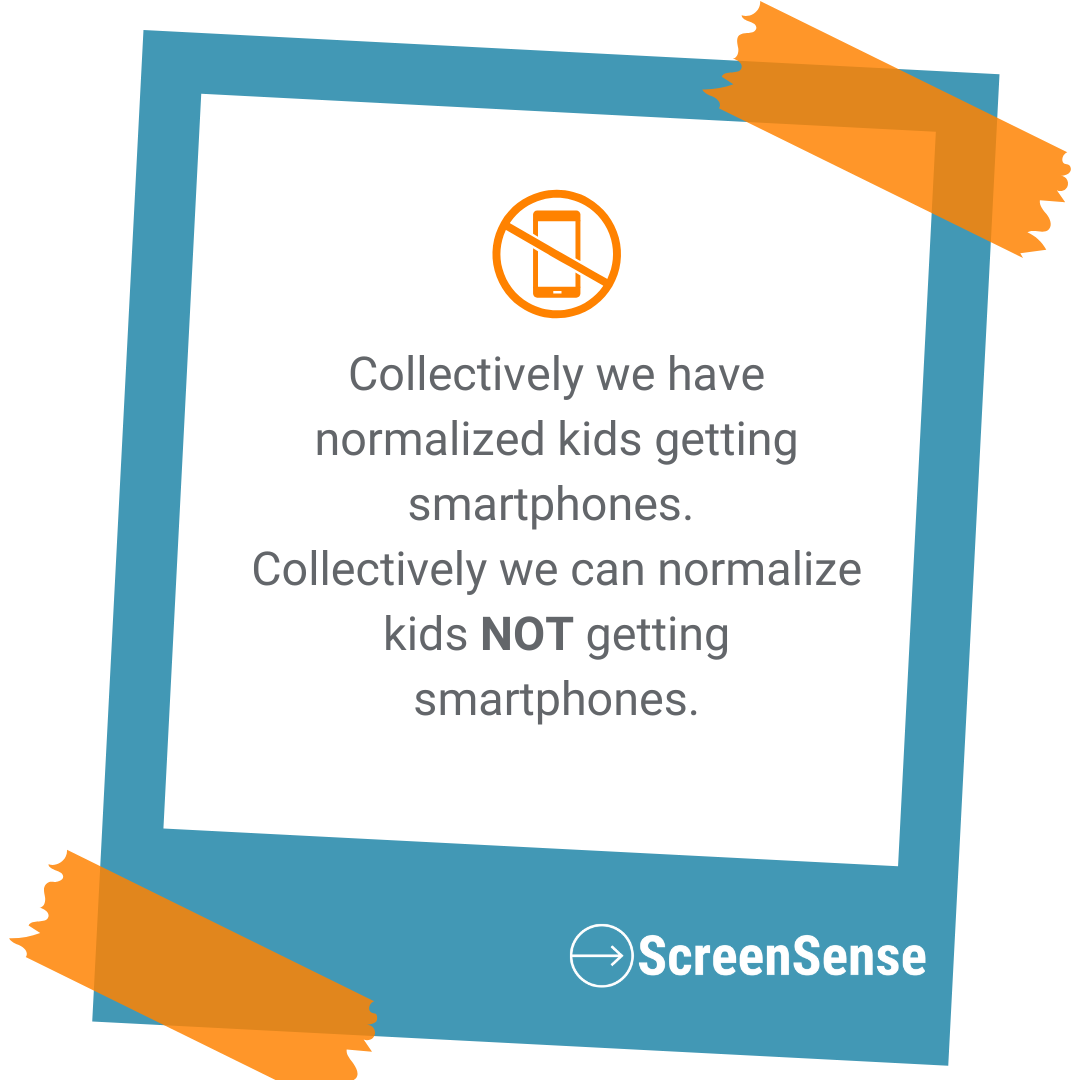
This call to collective action has been passed to the current 5th grade parents. Currently, 37% of 5th graders across the five feeder elementary schools have now joined the phone pact, up from 17% at the start of December 2025. Our Kids IRL 4th and 5th grade Ambassadors are working together to learn from last year’s 5th grade parents in order to create the best support for navigating the “Can I have a phone?” question, including how parents of younger kids can get involved as well. If younger grades also proactively and collectively commit to delaying phones, we’ll get ahead of the smartphone issue and continue making meaningful local change.
Jonathan Haidt says - “No single person, family, or school can solve this crisis alone. The changes that have caused the problem are societal, and it will require collective action to fix them.” Often, as humans, we see a problem and want to make sweeping, fast and drastic changes. When we can’t, we can easily feel defeated and give up. And then do nothing. But parenting tech and changing youth tech norms is a marathon, not a sprint. It takes patience and stamina. It takes trust in the process of change. It takes one determined parent to get things started.
Alex Tower Ewers is the Director of Communications at ScreenSense. She enjoys creating community and bringing people together. She is the mom of 2 teen boys and parenting tech along with the rest of us! ScreenSense is a small fiscally sponsored organization based in Northern California, that empowers parents and schools to teach healthy tech use to children. They firmly believe in introducing tech slowly, in age-appropriate ways - with guardrails and limits so tech use doesn’t crowd out essential childhood activities. Their content and resources are available on their website and via in-person and virtual parent ed events. ScreenSense is HQ for Kids IRL, their hyper local collective action initiative in Marin County that helps Tk-8th grade parents and schools build community around slowing down tech together.