
Send your tween out exploring!
By Alex Tower Ewers, Director of Communications, ScreenSense
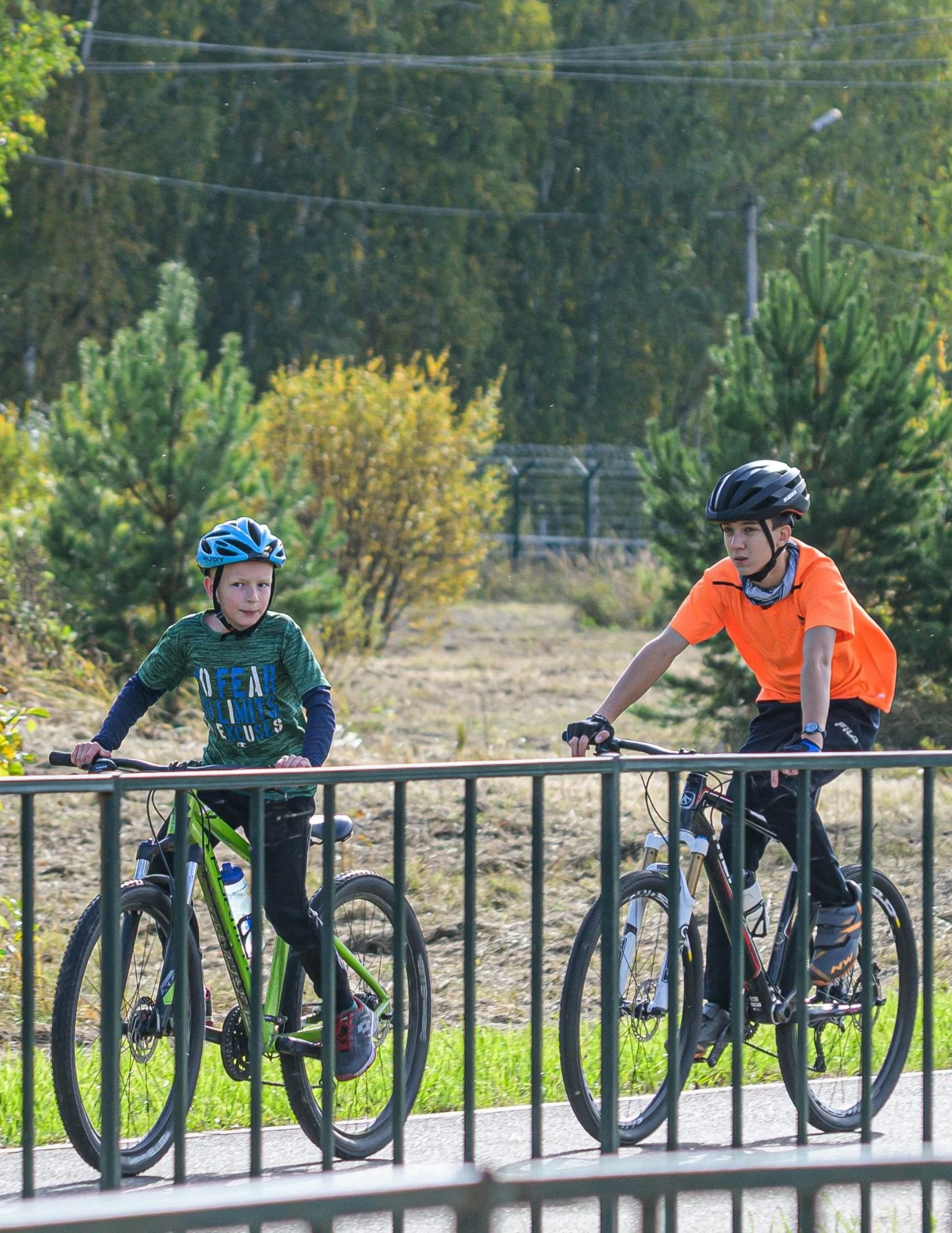
Summer is the perfect time to give tweens a little more freedom to roam, explore, and figure out who they are. Free-range summers, where kids can ride bikes around the neighborhood, hang out with friends without a packed schedule, or simply wander and get bored are actually some of the most developmentally important experiences a child can have. Unstructured time builds independence, creativity, problem-solving, and resilience in ways that no app or screen ever can. When tweens are given the space to take small risks, make decisions, and experience the world on their own terms, they grow in confidence and self-reliance. So this summer, consider loosening the schedule, putting down the devices, and letting your tween discover what they're capable of when left to their own imagination.
One of the best ways to encourage independence and adventure this summer is to create a tween bucket list of things to do right in your own town - no parents required! Sit down together and brainstorm a list of local spots and activities your tween can explore on their own or with friends: the library, a favorite bakery, a nearby park, a bike trail, a farmers market, a maker space, outdoor movies or a local pool. (At local pools in our area, kids are allowed to go without adult supervision at age 10.) The key is to make it feel like an adventure, not a chore. Let your tween take ownership of the list, adding their own ideas, checking things off, and even discovering new places along the way. Not only does this give them something fun and purposeful to do away from screens, it also builds confidence, navigational skills, and a sense of belonging in their community. A summer spent exploring their own backyard, on their own two feet, might just be the most memorable one yet.
Sound like something you want to try?
You can! Here’s how….
Get yourself mentally prepared!
Learning to let our tweens and young teens explore on their own is a muscle we as parents need to build. Developing independence and autonomy are two childhood essentials that can be hard for parents. But the more they practice, the more we get to practice too and the easier it gets. I promise you this!
We have “overprotected our kids in the real world” (Jonathan Haidt, 2024) and part of slowing down tech in childhood means parenting in-real-life activities in a different way. For many parents they can’t imagine letting their tweens or teens explore independently without tracking them. Many parents choose to purchase first smartwatches or smartphones in order to let their children be more independent. This is an individual choice, of course, but it is one we at ScreenSense urge parents to really think about. Could you parent more like it’s 1999?
Location tracking or not?
If you can’t imagine letting your kids explore independently without knowing where they are, here are some no tech and low tech options that don’t intrude on childhood. Choose the least amount of tech to meet your needs!
Identify trusted call spots for your child: Figure out what places - e.g., library, local store/business, neighbor - would allow your child to call you if needed. Get a thumbs up from the places/people and then teach your child how to ask to make a call. Make sure they memorize your phone number. In addition, coach them how to ask someone for help when they are out and about. Like a parent with a stroller!
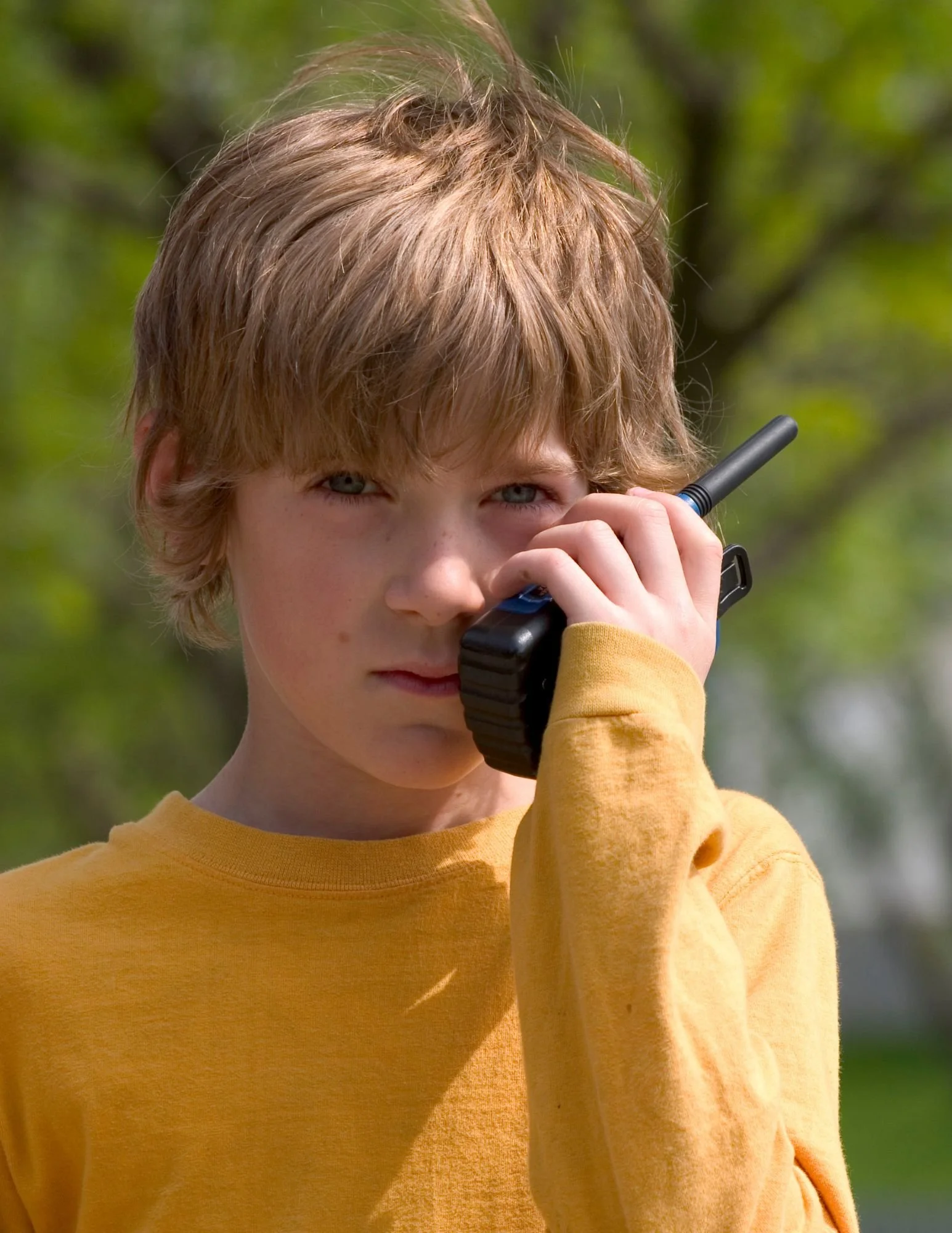
Walkie Talkies - Don’t laugh! We see this working. Perhaps a better solution for younger elementary students, it is a great first tool to let your child explore their neighborhood!
Greenlight Safe Kids - is a tracking mechanism that some parents really love because it means they can send their tweens exploring without buying them a watch or smartphone!
Apple AirTags - Parents are using these to track the location of young children, placing them in shoes, backpacks, or wearable holders. Please note: these devices were designed for items, not people. AirTags can offer location but lack direct communication or emergency alerts. Their location updates can be delayed, making them better for general area checks than immediate, precise tracking, according to experts and users.
Smartwatches - We recommend delaying all mobile devices until middle school, including watches. If your family situation requires a form of mobile communication in elementary school, a smartwatch designed for kids can be an option if set up correctly with safeguards in place. Smartwatches are wearable devices that look like watches but function more like a simplified smartphone. They let children make calls or send messages to approved contacts and allow parents to track their location. Many models limit access to the internet and social media, which can make them feel like a safer first mobile device. They can help build independence but may also push kids to early connectivity, lead to over-reliance on parents, and be a source of distraction at school if not used thoughtfully. One option is to introduce a loner smartwatch that gets used for independent exploration only. For more details visit Simple Phones & Watches.
Now the fun part - make the list!
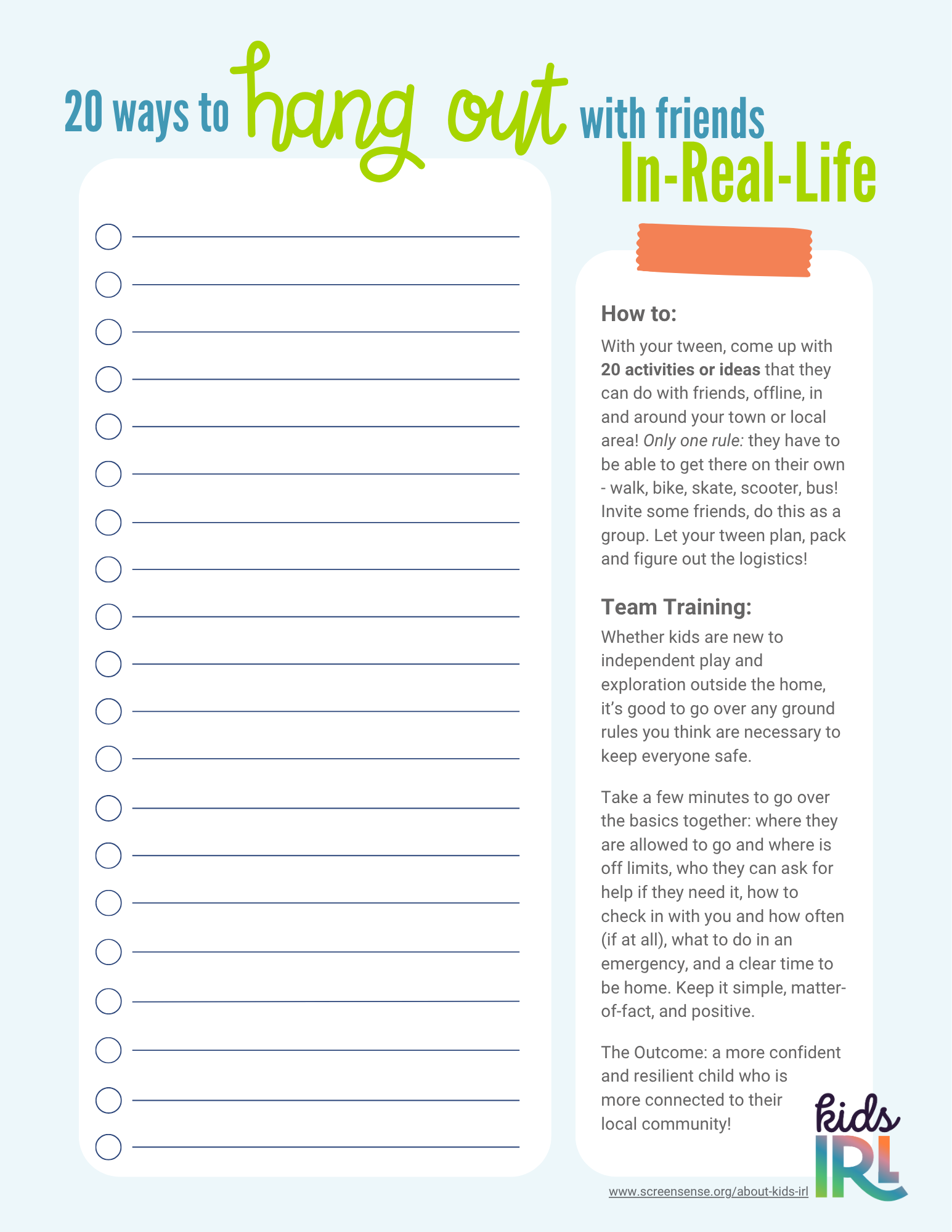
With your tween, brainstorm a list of 20 things tweens and teens can do on their own - without a grown-up. Collaborate with other parents. Ask friends with older kids. You may get tips and suggestions that are new to you! Include visiting local businesses, restaurants, parks, pools, libraries, trails, etc. Think about where your tween can walk, bike, or bus on their own!
Make the journey part of the experience - it’s good for them and the environment and an excellent way to practice those crucial executive functions skills! Can they ride bikes? Can they take public transportation? Many city and town bus systems let youth ride for free so have them look that up in your area.
Use our"20 Things to do with my friends IRL"handout to capture your ideas and get organized!
Make screen time meaningful and useful as part of this process. Have them research things to do with kids in your area, show them how to use Google Maps to explore attractions in an area. Your kids are likely on YouTube anyway - so find videos about where you live and see what makes it on travelers’ bucket lists.
Send them on their way!
Let them plan the logistics. Do they need tickets? Do they need to reserve a spot? Do they need snacks and water? Yes, they may forget the sunscreen or end up eating popcorn for lunch but those are good learning lessons!
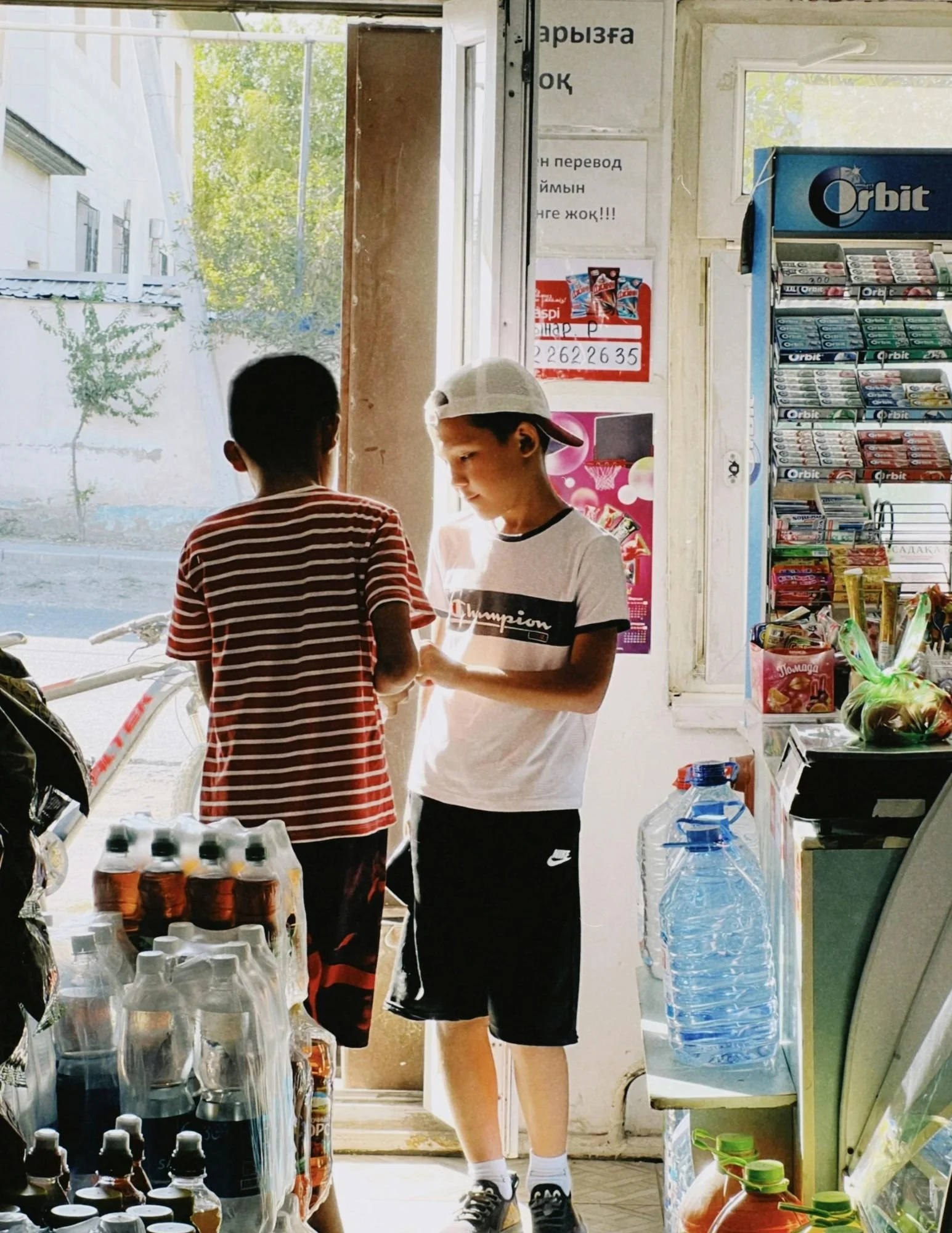
Show them the money. We’re accustomed to paying with our phones but there is a benefit of kids using cash or their own debit card to pay for things as a way to start learning to manage money. Whether they are using their allowance, earned cash, or you are funding the activity is up to you. Using cash instead of their parents’ credit card tied to ApplePay can be a helpful tool for learning to handle money and stay on a budget. It also helps them understand how to make wise money decisions. If you don’t want to use cash, we LOVE the Greenlight Debit Card as a starter debit card.
Go over some safety rules. If the kids are new to unsupervised outings and exploring, make sure to cover some basic safety rules. If there is a specific safety need in your area (crossing a busy street or highway, for example), make sure to cover that as well so everyone is on the same page. Even for kids who have a lot of independence, it’s good to go over any ground rules you think are necessary to keep everyone safe. Agree on when to be back home and send them on their way! Now exhale - you may find you have a few extra minutes to enjoy a quiet house.
Share the fun!
Share or co-create the list with your friend group, neighborhood, child’s class, school admin, pediatrician, soccer team, etc. Invite others to join. We want to normalize kids exploring on their own again!
Make a game out of it. Within a group of friends you can gamify the list like a Bingo game. How many can the kids cross off in a week? Or in July? Or all summer? Attach a prize and let the exploring begin!
Create a WhatsApp “Go Outside” parent chat. If your tweens need a little help at first, this new trend lets parents share with peers that their child is headed out and about. “Bill is headed to Boyle Park” and then nearby parents can gently urge their kids to join.
If you have listed specific local businesses, bring them a copy of your final list so they know they are included on your local in-real-life (IRL) list!
With summer vacation on the horizon, having a plan for how to get tweens and teens out of the house can be a helpful tool. Plus it’s just a fun way to reconnect with your community and explore local favorites. And, for us parents, it’s good practice for getting out the way. In closing, when our tweens do more IRL activities, we get a two-fer: we naturally crowd out screen time AND they feel more connected to the people and world around us.
Happy Exploring!
____
Alex Tower Ewers is the Director of Communications at ScreenSense. She enjoys creating community and bringing people together. She is the mom of 2 teen boys and is parenting tech along with the rest of us! ScreenSense is a small fiscally sponsored organization based in Northern California, that empowers parents and Tk-8th grade schools to teach healthy tech use to children. They firmly believe in introducing tech slowly, in age-appropriate ways - with guardrails and limits so tech use doesn’t crowd out essential childhood activities. Their content and resources are available on their website and via in-person and virtual parent ed events. ScreenSense is HQ for Kids IRL, their hyper local collective action initiative in Marin County that helps parents and schools build community around slowing down tech together.