
Everybody is Using AI
But what happens to the moments we don’t?
By Chris Sciullo - This post originally appeared in “The Connected Parent”, SubStack on Jan 17, 2026.
My first computer was a Packard Bell that sat in the corner of my family’s living room.
Using it meant you stared at a black screen with a blinking cursor and had to type commands just to make the computer do anything at all.
The computer ran on floppy disks. And for some reason, our local grocery store sold them—five-dollars for a random disk in a white sleeve. You never really knew what you were getting until you brought them home and booted up.
My favorite game I ever bought was Hugo’s House of Horrors — a 1990 MS-DOS adventure game where you navigated a haunted mansion trying to rescue your girlfriend, Penelope, from all kinds of terrible creatures.
There were no buttons to click. And the only way to play was to prompt the game with different commands:
“Go north.”
“Open door.”
“Pick up key.”
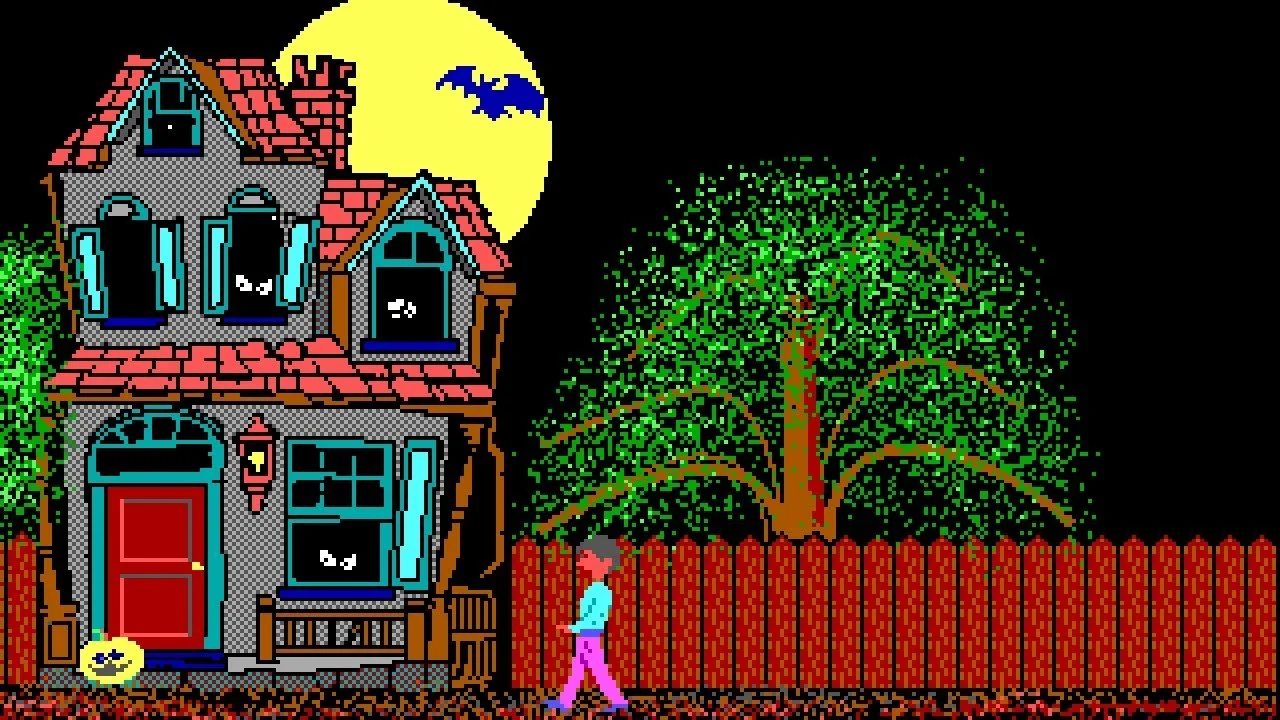
Hugo’s House of Horror’s adventure game - circa 1990
Most of the time it didn’t understand what you meant, so you had to think carefully about how to prompt the game differently until it finally worked.
And if you gave it enough time and attention, eventually it did.
You rescued Penelope, shut off the computer and went back outside.
Fast forward thirty-five years. We’re still staring at black screens and prompting computers.
ChatGPT is now one of the most-used programs on the internet. And just like Hugo, it runs on prompts. But instead of a blinking cursor, it offers an “Ask Anything” box.
And this time, not only does it understand every command you send it…it talks back.
Ask it to write your essay, and it does. Ask it to explain the math you don’t get, and there it is. Need step-by-step instructions to fix your dishwasher? Here you go.
There’s no waiting. No working through it.
Just ask anything, and the answer appears.
I ask AI to draft emails I could write myself. I use it to summarize articles I should probably just read. My wife asks it what to cook for dinner. And my kids love to use it to generate different images of their stuffed animals.
We use it daily. You probably do too.
Because it’s not really a choice anymore. AI is built into everything now — Gmail suggests replies, our phones edit photos before we even take them and search engines answer questions before we finish typing them.
It’s pretty amazing, right?
So why is it that every time I use it, I wonder what we're trading for that convenience?
And more importantly, what am I teaching my kids in the process?
They watch me hand off my thinking, my writing, my problem-solving to a screen that does all the hard work for me.
That’s why I can’t help but think of that black screen and blinking cursor from my childhood.
When I played Hugo’s House of Horrors, most of my time wasn’t spent winning. It was spent being stuck. Typing commands that didn’t work. Trying again. Getting frustrated. Walking away for a while. Coming back. Then eventually figuring it out.
The game wasn’t the reward. The figuring out was.
And I’m worried we’re losing that.
Not just the patience to work through hard things — but the space where thinking actually happens. Where boredom forces you to get creative. And not-knowing something makes you curious instead of just efficient.
Every time I reach for AI instead of sitting with a question, I’m modeling something I don’t fully mean: that answers matter more than understanding. That speed beats depth. And that you should never have to be uncomfortable, stuck or bored.
So I keep coming back to this question:
What if it’s not about teaching them how to use AI — but when not to?
We can’t go back to floppy disks and DOS prompts. Though some days I think that’d be really tempting.
But we can still go outside. We can still close the laptop sometimes. I can let my kids see me sit with a question for a minute before I reach for an answer.
The question isn’t whether they’ll use AI. They will.

The question is whether they’ll know when not to. Whether they’ll recognize the difference between what makes life easier and what quietly takes something away.
I know they’re watching. Not just what I use but what I choose.
And maybe that’s where it starts. ✌️
_____________
Written by Christopher Sciullo, founder of Wildly × Well and creator of the H.E.A.L. Method. Chris helps parents balance their own tech use while guiding kids toward healthier screen habits—so we can all rediscover the wonder of life beyond the screen. You can follow Chris’s Blogs “The Connected Parent” on SubStack.