
AI Toys for Kids: What You Need to Know
By Jean Rogers - Director, Fairplay’s Screen Time Action Network
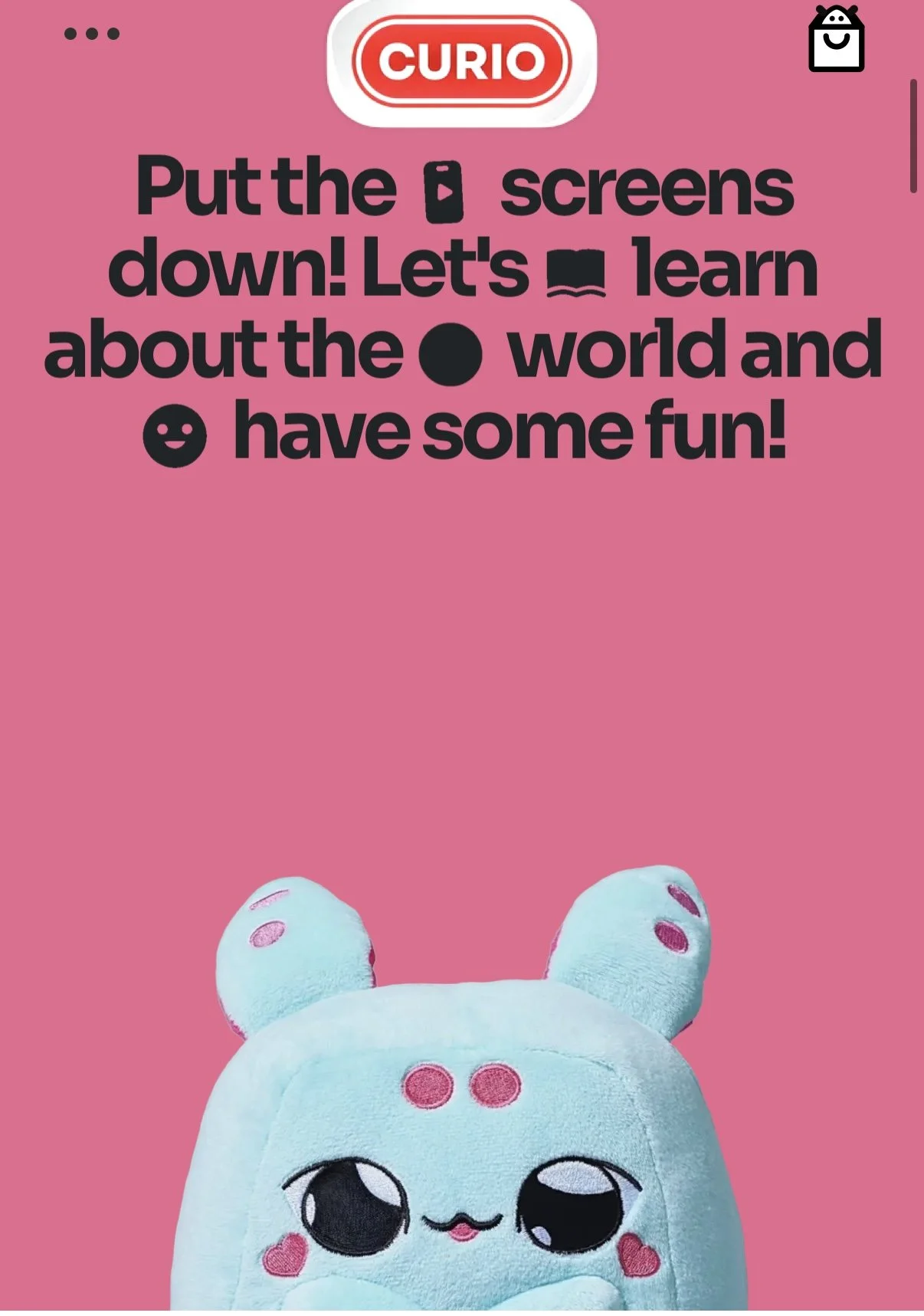
An Ad from Curio for their new “Grem” AI Toy.
Many of us can get wrapped up in the commercial giving season this time of year. Personally, I enjoy some of the glitz. But, this year more than any other, the weight of societal trauma and violence– real or artificially simulated– can put a damper on festivities and encourage us to bond intentionally with those we love.
Children, our most vulnerable population, can be caught in the crossfires if we don’t give them and ourselves permission to unplug.
The threat of AI toys, an unwelcome holiday craze, arrived on the scene to challenge activists at a time when we just hope for a break. Some of us panic, thinking of the insidious nature of invasive tech and how many children are already harmed before we can even create a post or podcast. Some throw up our hands and say, “What will be next?” Others roll up our sleeves and get to work.
AI toys have no place under the tree, the menorah, or the bed quilts.
The idea that AI chatbots, embedded in everyday children’s toys like plushies, dolls, and action figures, can prey on children’s developmental vulnerabilities is a travesty. And they are marketed as screen-free, exploiting parent desires to help their children unplug.
Here is my recipe for keeping children unplugged from these AI chatbots disguised as precious stuffed animals or cute gregarious robots:
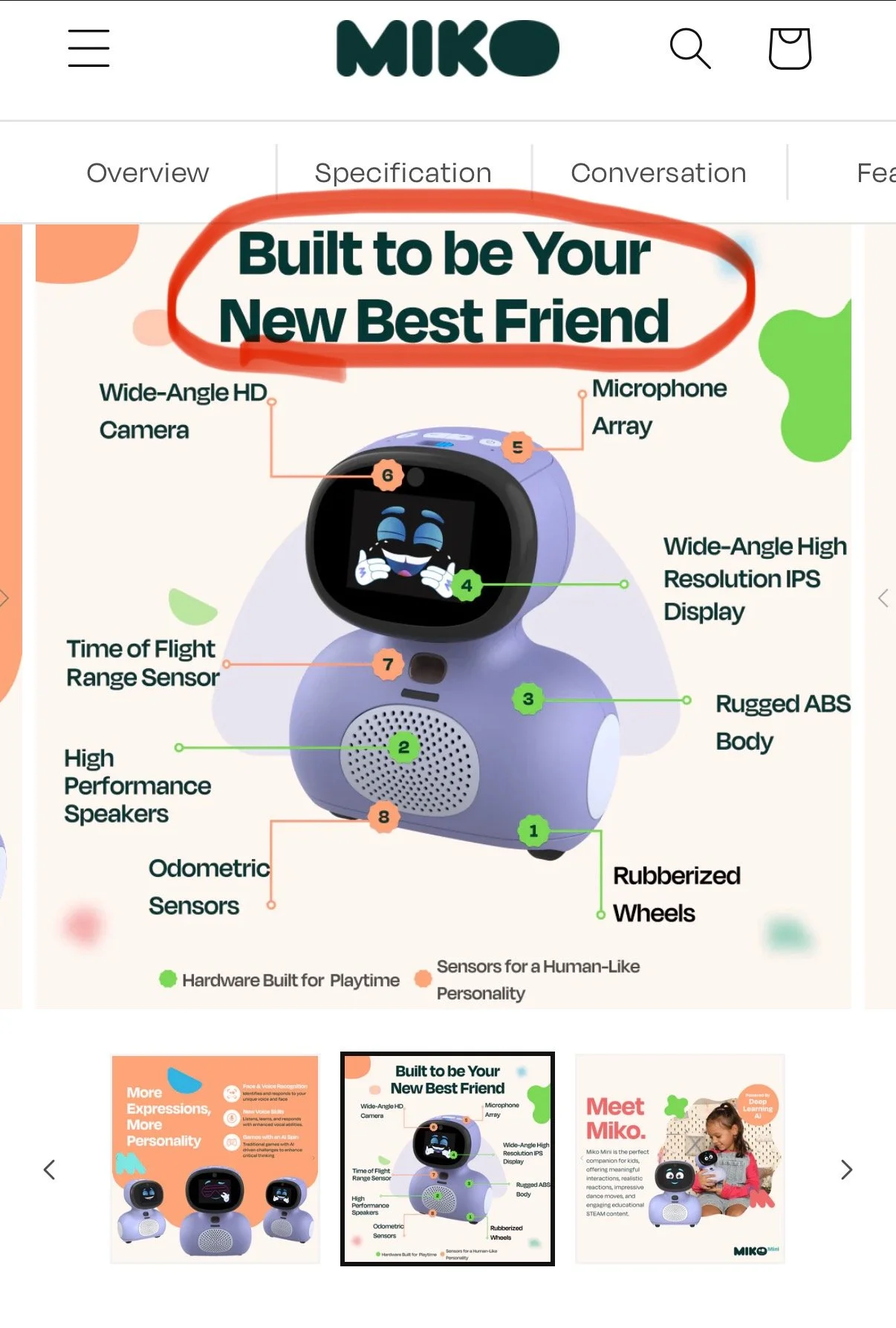
Ad for Miko found at Costco, Walmart, Kohls and Amazon.
Step 1: Memorize these five reasons to stay away from AI toys this holiday season and beyond:
They are usually powered by the same AI that has already harmed children.
They prey on children’s trust.
They disrupt children’s relationships and resilience.
They invade family privacy by collecting sensitive data.
They displace key creative and learning activities.
That’s all you really need to know and say to friends, family, and colleagues who might be considering a purchase of an AI toy.
Step 2: Explain that the hype, including the fact that they are marketed as screen-free, is a cover for privacy violations and profit motives that put very young children at risk.
Step 3: If you have the time, read our full AI Toy Advisory, which explains the research in more detail. You’ll also see our the impressive list of signatories!
Step 4: Bring this AI Toys One-Pager to your child’s school, sports team, pediatric or dental office, or faith community to share with other parents.
Parents and educators of young children have it the hardest. They may not yet understand child development and are confused by conflicting advice they see on different websites and social media. That’s why I wrote a decisive text, with two colleagues, Patricia Cantor and Melinda Holohan. Screen-Aware Early Childhood: A Realistic Approach to Helping Young Children Thrive in a Digitally Complex World equips early childhood professionals to grow their “screen awareness”—the knowledge and practices that uphold the developmental well-being and rights of children in a screen-based, media-centric society. If you’re hopping off the commercial bandwagon and have parents or teachers on your gift list, we wish this book, with its practical, research-based approach, might be a present to help them stay present with the children they love and serve.
As I look to the New Year, I look forward to partnering for the Global Day of Unplugging and keeping that spirit alive all year.
Jean Rogers
Director, Fairplay’s Screen Time Action Network